
Wildfire Evacuation Response: Managing Mass Civilian Casualties
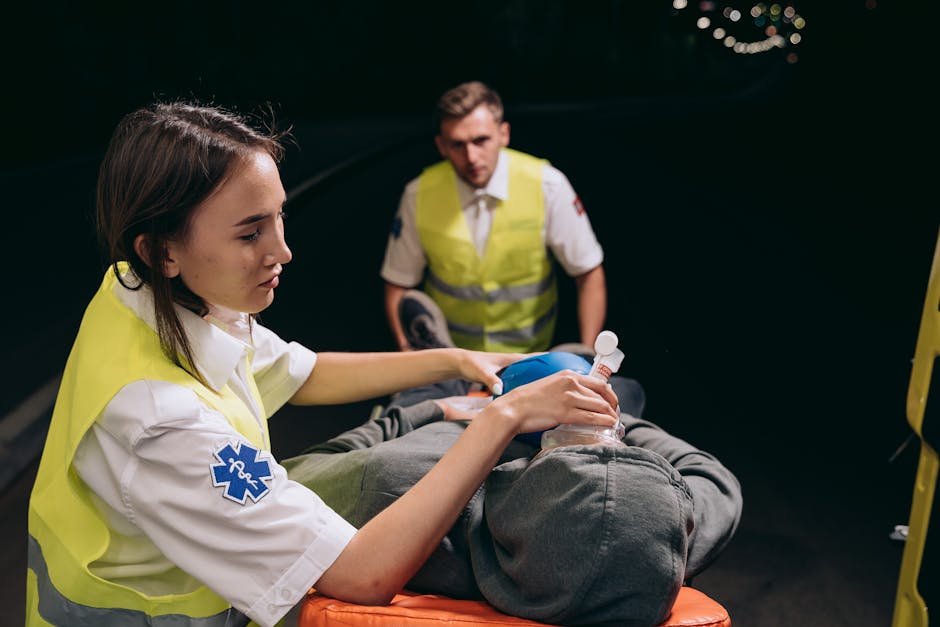
Wildfires are a growing threat, especially across California and other vulnerable regions. When blazes spread, they don’t just destroy property; they force rapid, large-scale evacuations, often leading to mass-casualty incidents involving civilians. The chaos that ensues challenges even the most experienced first responders, demanding immediate, decisive action to save lives. You’re facing a dynamic, dangerous environment where resources are stretched thin and every second counts.
Managing a civilian mass-casualty incident during a wildfire evacuation means dealing with injuries ranging from burns and smoke inhalation to trauma from falls or vehicle accidents during hasty departures. The sheer number of potential victims can quickly overwhelm emergency medical services. How do you sort through the injured effectively, ensuring those with the most urgent needs receive attention without delay?
This is precisely where an organized, memorable method like the START (Simple Triage and Rapid Treatment) system becomes indispensable. At START Triage, we’ve seen this battle-tested system deployed in some of the most challenging scenarios, from the 9/11 World Trade Center attack to the 1995 Oklahoma City bombing. It’s designed to help first responders quickly identify the most critically injured, making efficient use of limited resources and reducing decision fatigue under immense pressure. It’s also vital for preparing for wider emergencies, as we cover in our guide to Workplace Emergency Preparedness: Large Facility Response Planning.
Foundation: What Is the START Triage System?
The START (Simple Triage and Rapid Treatment) system is a straightforward, user-friendly triage system developed in California in 1983 by the Newport Beach Fire Department and Hoag Hospital. Its purpose is to allow first responders to quickly assess and categorize victims in a mass-casualty incident based on their immediate need for medical attention. The system classifies patients into four categories: Immediate (red), Delayed (yellow), Minor (green), and Deceased (black). This rapid assessment is crucial for allocating scarce resources effectively when a disaster overwhelms conventional medical response capabilities.
A core principle of START is its focus on physiological assessment. As the U.S. National Library of Medicine points out, “START triage uses simple assessments of respiration, perfusion, and mental status to quickly categorize patients.” This allows responders to make critical decisions under pressure, focusing on objective signs rather than complex diagnoses. You can find more details on this methodology on the National Library of Medicine website.
How Does START Triage Work During a Wildfire Evacuation?
During a wildfire evacuation, responders encounter victims in various states of injury and distress. The START system streamlines this initial assessment through a simple, algorithmic approach. It prioritizes individuals based on their ability to walk, their respiratory status, circulatory function (perfusion), and mental status. Responders can triage each victim in 60 seconds or less using this method, making it ideal for dynamic, widespread incidents like a large-scale wildfire.
The process follows the “RPM” mnemonic:
- Respirations: Is the patient breathing? If not, reposition the airway. If they start breathing, tag them “Immediate.” If they don’t, tag them “Deceased.” If they are breathing, check their rate. If over 30 breaths/minute, tag “Immediate.” If under 30, move to Perfusion.
- Perfusion: Check capillary refill time (CRT) or radial pulse. If CRT is over 2 seconds or no radial pulse, tag “Immediate.” If under 2 seconds or pulse is present, move to Mental Status.
- Mental Status: Can they follow simple commands? If not, tag “Immediate.” If they can, tag “Delayed.”
Those who can walk are automatically categorized as “Minor” and directed to a safe collection point for secondary assessment. This rapid categorization ensures that those closest to death are identified first, allowing limited resources to be directed to where they can make the biggest difference. The ability to quickly identify and manage a large number of casualties is a hallmark of the START system, a methodology that proved invaluable during the START Triage Response at the 1995 Oklahoma City Bombing.
What Are the 5 Basic Emergency Responses?
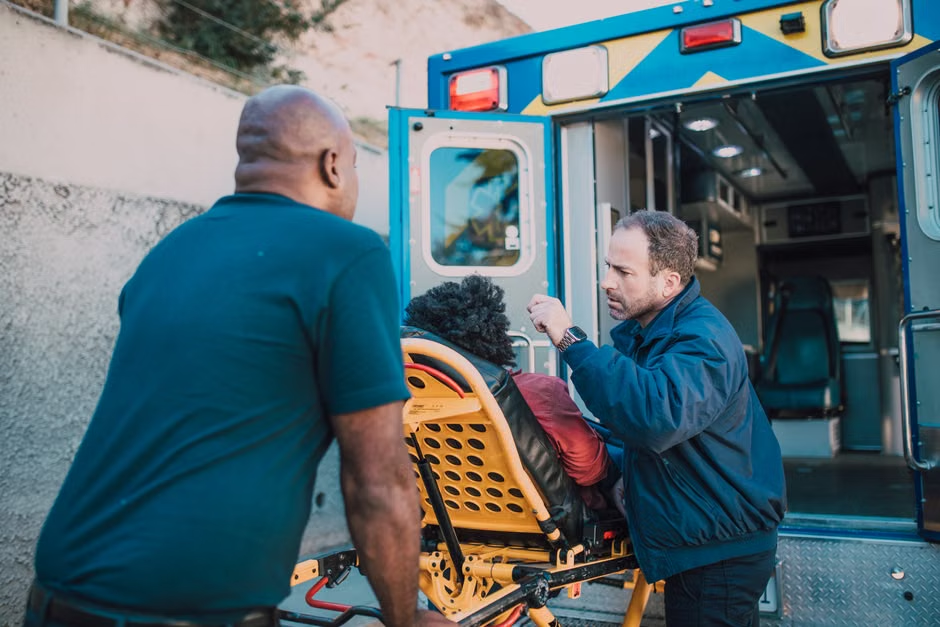
In any emergency, including a wildfire, the five basic responses often involve shelter, evacuate, lockdown, secure, and defend. While “defend” might be more applicable to structural fire suppression, for civilian populations, the core actions revolve around protection and movement. Incident commanders make critical decisions on whether to evacuate or shelter in place based on the specific threat, aiming to keep people safe.
For first responders, however, the “5 basic emergency responses” take on a more active role in a mass-casualty scenario. These generally include:
- Assessment: Rapidly evaluating the scene and the number of casualties.
- Triage: Prioritizing victims for care based on injury severity and prognosis.
- Treatment: Providing immediate life-saving interventions (e.g., hemorrhage control, airway management).
- Transport: Moving stabilized patients to definitive medical care.
- Command and Control: Establishing an organized incident management structure.
The START system directly supports the assessment and triage phases, providing a clear framework when chaos threatens to overwhelm the response. Without a structured approach like START, even experienced teams can struggle to manage the sheer volume of injured individuals effectively.
The Decision to Evacuate Affected Areas or Shelter in Place Is Made By Whom?
The decision to evacuate affected areas or shelter in place is primarily made by local emergency management officials and law enforcement, often in consultation with fire department incident commanders. These leaders assess the immediate danger, the potential for rapid change in conditions, and the safety of evacuation routes. Their expertise, combined with real-time data from weather services and fire behavior models, guides these life-or-death choices.
This decision-making process is critical, especially in fast-moving events like wildfires, where conditions can shift dramatically. Once an evacuation order is issued, the focus shifts to safe, orderly movement of civilians, which is often where mass-casualty incidents can arise due to panic, traffic accidents, or direct exposure to hazards. Ensuring a clear chain of command and reliable communication is vital to executing these decisions safely and effectively.
What Should You Look For: Identifying Casualties in a Wildfire Evacuation
Wildfires present unique injury patterns. Responders arriving on scene during or after an evacuation need to quickly identify those in need of immediate attention. We’re looking for clear signs that a person requires rapid treatment and transport.
Here’s what to look for when assessing victims in a wildfire evacuation scenario:
- Respiratory Distress: Coughing, wheezing, shortness of breath, soot around the mouth/nose, or hoarse voice. Smoke inhalation is a primary concern.
- Burns: Visible burns of any degree, especially on the face, neck, hands, or genitals, or large areas of the body.
- Traumatic Injuries: Falls from hurried evacuation, vehicle collisions, impacts from falling debris. Look for fractures, lacerations, or head injuries.
- Altered Mental Status: Confusion, disorientation, unresponsiveness. This could indicate hypoxia, head injury, or carbon monoxide poisoning.
- Profuse Bleeding: Any uncontrolled external hemorrhage demands immediate attention.
- Signs of Shock: Pale, cool, clammy skin, rapid heart rate, weakness.
- Panic/Severe Anxiety: While not an immediate life threat, extreme psychological distress can hinder evacuation efforts and complicate assessment.
In our practice, we’ve seen countless times how quickly a seemingly minor injury can escalate under the stress of a mass-casualty incident. That’s why the START system is designed to catch these deteriorating conditions early, allowing responders to act before it’s too late.
“In a mass casualty incident, the initial assessment and sorting of patients is paramount. The START system offers a simplified, rapid, and reproducible method for frontline providers to allocate resources appropriately, preventing chaos from overwhelming the response.”
Nuanced Suitability: When START Triage Is Best (and When Alternatives Might Fit)
The START system excels in mass-casualty incidents (MCIs) where a large number of victims requires rapid assessment and resources are initially limited, such as a major California wildfire. It’s designed for the initial “front-line” assessment by the first responders on scene, allowing for quick categorization to facilitate efficient resource deployment and transport. Its simplicity is its strength; it’s easy to learn, easy to remember and easy to use, even under extreme pressure.
However, it’s not the only triage system, nor is it always the single best fit for every phase of every incident. For pediatric victims, for instance, a specialized system like JumpSTART is recommended due to physiological differences in children. While START gives you a quick overview, more sophisticated, resource-intensive systems might be employed at secondary or tertiary triage points in a more controlled environment (e.g., a hospital’s emergency department). These might include SALT (Sort, Assess, Life-saving Interventions, Treatment/Transport) or more detailed physiological scoring systems. Andres Price, one of the developers of the current system, often emphasizes that the goal is always “to do the greatest good for the greatest number” in the initial chaotic phase, which START is uniquely equipped to handle. Our training for incidents like Earthquake Emergency Response: START Triage for California Responders also emphasizes its role in initial, chaotic scenes.
“Effective disaster triage requires a system that is simple to implement, reliable in various conditions, and minimizes cognitive load for responders under duress. Rapid, systematic categorization helps prevent overwhelm and ensure critical patient needs are addressed.”
What to Expect After Implementing START: Realistic Outcomes
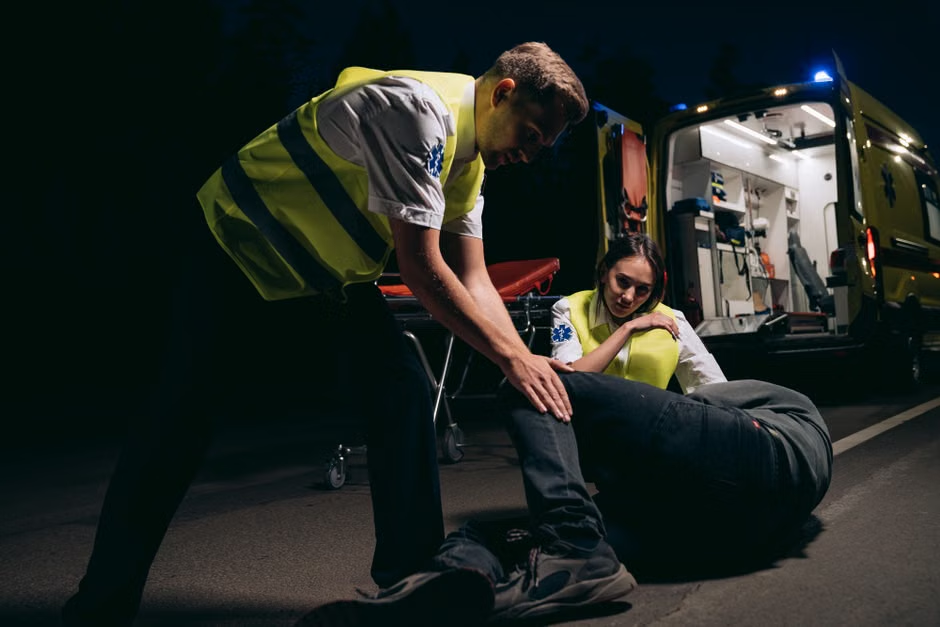
When your team is trained in START Triage, you can expect a significant improvement in the organized management of mass-casualty incidents like wildfire evacuations. The primary outcome isn’t necessarily a decrease in overall casualties (that depends on the severity of the incident itself), but a more efficient and effective allocation of medical resources. You’ll see responders quickly identifying those with the most critical needs, potentially reducing preventable deaths and serious long-term complications.
Realistically, the initial phase of any MCI will remain chaotic. But with START, that chaos becomes manageable. Within minutes of arrival, a trained team can have a preliminary assessment of dozens of victims, directing those with minor injuries to safe zones and bringing critical resources to the “Immediate” patients. This allows for a more streamlined flow of patients from the incident scene to transport and definitive care. The system’s effectiveness was notably demonstrated during the chaotic scene of the START System at 9/11 World Trade Center Attack, where rapid assessment was crucial.
Practical Tips for Wildfire Evacuation Response Teams
Deploying START Triage effectively during a wildfire evacuation requires more than just knowing the algorithm; it requires preparation and practice. Here are some practical tips for your response teams:
- Regular Drills and Scenario Training: Practice START triage in realistic, simulated wildfire evacuation scenarios, complete with smoke, noise, and multiple “victims.” This builds muscle memory and reduces decision fatigue when it counts.
- Pre-position Triage Tags: Ensure your rapid response vehicles and caches are stocked with a sufficient supply of START triage tags. They need to be immediately accessible.
- Integrate with Incident Command: Ensure all responders understand how their triage actions feed into the larger Incident Command System (ICS) for overall resource management.
- Prioritize Scene Safety: Always ensure the safety of responders first. A downed power line or an approaching flame front can quickly turn a rescue into another casualty.
- Clear Communication Protocols: Establish clear radio communication channels and terminology for reporting triage results and requesting resources. This is especially vital when multiple agencies are involved.
- Consider Psychological First Aid: While triaging physical injuries, don’t overlook the psychological impact of wildfires. Direct those with severe emotional distress to appropriate support after life threats are addressed.
Wildfire events will continue to test our emergency response capabilities. Equipping your first responders with the knowledge and tools of the START Triage system isn’t just about compliance; it’s about preparedness. It’s about ensuring that when faced with a rapidly escalating incident, your team has an organized, memorable method to quickly identify the most critically injured, use limited resources effectively, and ultimately, save lives.

Recent Comments