
Medical Facility Surge Planning: START in Hospital Settings

Hospitals are frontline defenders in any crisis, but what happens when the number of casualties far outstrips daily capacity? This scenario, known as a medical surge, presents an immense challenge. It’s not just about beds; it’s about staff, supplies, and the critical systems needed to manage a sudden influx of patients.
Effective surge planning within a hospital setting isn’t a luxury; it’s a necessity. Without a clear strategy, even the best medical professionals can become overwhelmed, leading to delays in care and potentially worsening outcomes. That’s where established, easy-to-use systems like START Triage play a crucial role. They help bring order to chaos before patients even arrive at the emergency department.
At START Triage, we’ve dedicated decades to developing and refining tools that ensure first responders, and by extension, medical facilities, are prepared for the worst. Our system is designed for scenarios where every second counts, enabling responders to quickly identify the most critically injured. For more on how simple, effective systems bolster overall readiness, consider our insights on the role of simple systems in emergency preparedness.
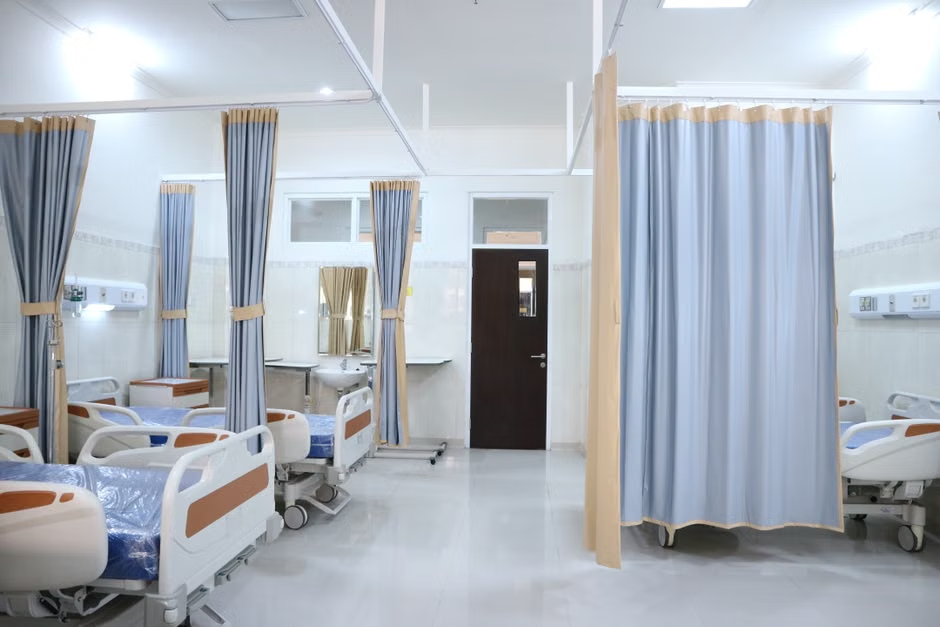
What is a surge plan in a hospital?
A hospital surge plan is a detailed framework outlining how a medical facility will expand its capacity and capabilities to manage a sudden, overwhelming influx of patients during a mass-casualty incident. This plan addresses everything from staffing adjustments to resource allocation, ensuring the hospital can provide care effectively and efficiently under extreme pressure.
The core concept behind surge planning is to optimize patient flow and resource utilization when normal operations are insufficient. This isn’t just about expanding physical space; it involves activating specific protocols, reassigning personnel, and sometimes converting non-clinical areas into patient care zones. The U.S. Department of Health and Human Services (HHS) defines medical surge as the ability to provide adequate medical evaluation and care during events that exceed the limits of the normal medical infrastructure of an affected community. The objective is to save as many lives as possible, mitigating morbidity and mortality from the incident.
“Effective hospital surge planning is critical for minimizing the impact of mass casualty incidents on public health. It ensures that healthcare systems can maintain essential services while adapting to extraordinary demands.”
What is the surge protocol in a hospital?
Hospital surge protocols typically involve a phased activation system, moving from increased vigilance to full-scale emergency operations. These protocols detail how the facility will escalate its response, including notification procedures, staff recall, bed management, supply chain augmentation, and patient tracking. The goal is a coordinated, scalable response.
For instance, a Level 1 surge might involve calling in off-duty staff and opening observation units, while a Level 3 surge would include converting cafeterias into patient wards and canceling elective surgeries. Protocols also define the roles of different departments, from security to public relations, and how they contribute to the overall incident management. This structured approach helps reduce decision fatigue among staff during high-stress events, allowing them to focus on patient care.
In our experience, a well-drilled surge protocol, when paired with effective pre-hospital triage, makes a world of difference. We’ve seen how California fire departments, utilizing our START system, can quickly streamline the flow of information and patients to hospitals, giving facilities a crucial head start in preparing their surge capacity.
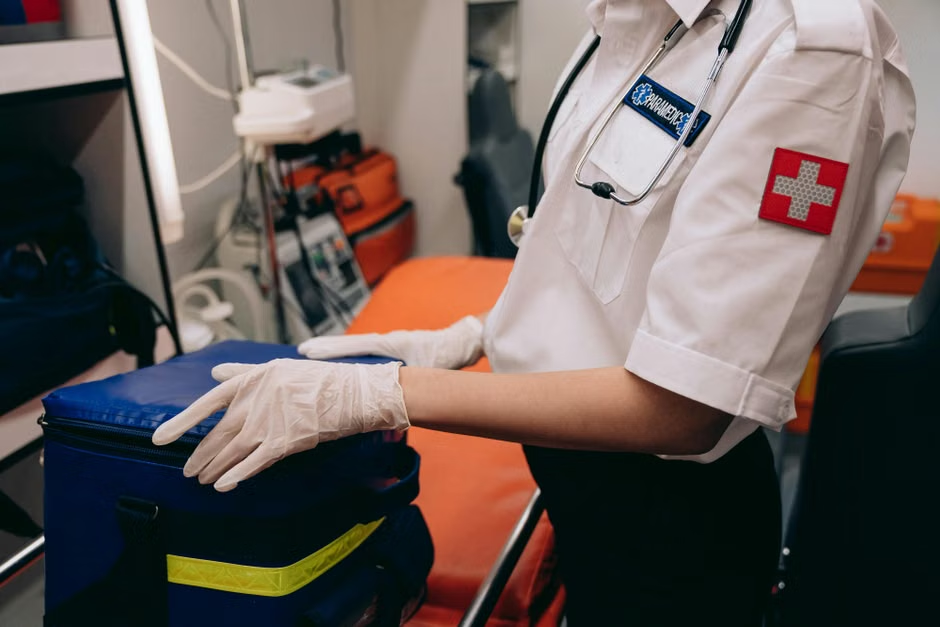
How does START Triage integrate with hospital surge planning?
START Triage, standing for Simple Triage and Rapid Treatment, is a system designed for first responders at the scene of a mass casualty incident. Its easy-to-learn, easy-to-remember, and easy-to-use methodology helps quickly sort victims into categories based on their immediate need for care. This initial classification—Red (immediate), Yellow (delayed), Green (minor), Black (deceased)—is invaluable to hospitals.
When mass-casualty incidents occur, first responders are the critical link, providing that initial assessment. The START system empowers them to triage each victim in 60 seconds or less. This rapid assessment, using the RPM mnemonic (Respirations, Perfusion, Mental Status), provides hospitals with actionable intelligence long before patients arrive. Knowing the approximate number of “Red” patients versus “Yellow” or “Green” allows the hospital to activate specific areas, prepare surgical teams, or dedicate resources to less critical care without delay. It’s about front-loading the decision-making and resource allocation.
“Pre-hospital triage systems, such as START, are fundamental in optimizing patient outcomes during large-scale emergencies. They provide a standardized, efficient method for categorizing patients, which directly supports hospital surge capacity by informing resource allocation.”
What is a medical surge?
A medical surge is when the demand for acute medical care exceeds the existing capacity of a healthcare system during a disaster or public health emergency. This can affect personnel, beds, equipment, and even basic infrastructure. It requires a significant and rapid scaling of resources.
When the 9/11 World Trade Center bombing and the 1995 Oklahoma City bombing occurred, systems like START helped manage the immediate chaos, demonstrating the real-world application of effective triage under extreme conditions. These incidents reinforced the need for simple, robust systems that function when conventional responses are overwhelmed.
What are the 4 C’s of surge capacity?
The 4 C’s of surge capacity are a framework to help hospitals plan for and manage overwhelming events. These are Command, Control, Communications, and Coordination. They represent the pillars upon which an effective surge response is built, guiding how resources, personnel, and information are managed during a crisis.
- Command: Establishing a clear incident command structure, often through a Hospital Incident Command System (HICS), to provide leadership and decision-making authority.
- Control: Implementing measures to manage patient flow, security, and resource allocation within the facility to maintain order and efficiency.
- Communications: Ensuring timely and accurate information exchange, both internal (staff, departments) and external (EMS, public health, media, families).
- Coordination: Collaborating with external partners such as other hospitals, emergency medical services, public health agencies, and government entities to present a unified response.
When these four elements are strong, a hospital can better withstand the pressures of a mass-casualty event. A system like START supports these C’s by providing clear data points from the field, which feeds into a hospital’s command and control decisions, facilitates internal and external communications, and aids in overall coordination with pre-hospital care providers. The integration ensures that the handoff from the scene to the hospital is as seamless as possible.
What types of incidents require medical facility surge planning?
Medical facility surge planning is essential for a wide range of potential disasters and emergencies. These events, regardless of their origin, can quickly overwhelm daily operations and demand a structured, scalable response. Recognizing these scenarios is the first step in effective preparation.
- Natural disasters: Earthquakes, hurricanes, floods, wildfires, or pandemics.
- Mass casualty incidents: Active shooter events, terrorist attacks, large vehicle accidents.
- Public health emergencies: Widespread disease outbreaks, bioterrorism incidents.
- Industrial accidents: Chemical spills, explosions, or large-scale hazardous material releases.
- Technological failures: Major power outages affecting critical infrastructure.
- Large-scale public gatherings: Concerts, sporting events, or parades that experience an unforeseen emergency.
- Prolonged utility disruptions: Water or power failures affecting hospital operations.
In our practice, we’ve seen how varied these incidents can be, emphasizing that preparedness must be flexible and robust. Whether it’s a multi-vehicle pile-up or a widespread illness, the need to manage a sudden influx of patients is constant.
Suitability: When to use START and when to consider other approaches
START Triage is exceptionally effective for initial, rapid victim assessment in chaotic, resource-limited mass casualty situations, particularly in the field. It’s ideal for quickly classifying patients into broad categories (immediate, delayed, minor) to guide initial treatment and transportation priorities. The system is easy to learn, easy to remember, and easy to use, making it perfect for first responders with basic first aid knowledge.
However, once patients arrive at a hospital, more detailed, definitive assessments become possible and necessary. While the START categories provide a vital initial framework, hospital-based triage systems, such as the Emergency Severity Index (ESI) or the Canadian Triage and Acuity Scale (CTAS), are designed for the more controlled environment of an emergency department. These systems allow for a deeper dive into a patient’s condition, incorporating diagnostic capabilities and specialized medical expertise. It’s not about replacing START, but building upon it.
Furthermore, specialized situations like pediatric mass casualties require a variant. That’s why we also offer JumpSTART, a pediatric-specific variant designed for different victim demographics, recognizing that children have unique physiological responses to trauma and illness. This layered approach—START in the field, followed by hospital-specific systems—ensures continuity of care and appropriate resource allocation from the moment of injury through definitive treatment.
What to expect from effective hospital surge planning and START integration
When a hospital successfully integrates robust surge planning with pre-hospital START Triage, you can expect a significantly more organized and efficient response to mass casualty incidents. The initial chaos is mitigated by a clear, pre-defined framework, and patient outcomes generally improve. This isn’t hype; it’s the result of diligent preparation and practice.
Within minutes of an incident, first responders will have triaged patients, providing invaluable data to incoming hospital teams. Expect the emergency department to activate its surge plan, rapidly reallocating staff and resources. The internal communication channels will be humming, coordinating bed assignments and surgical suite readiness. Over the next few hours, patient flow will be managed with greater precision, reducing bottlenecks and ensuring that the most critical patients receive care first. You’ll see a reduction in decision fatigue among providers, who can rely on established protocols.
In the longer term, the benefits extend to more efficient use of limited resources and a measurable reduction in morbidity and mortality. Facilities using this integrated approach often report smoother operations during drills and real-world events. Board-certified providers consistently recommend systems that simplify complex tasks under pressure, and the 60-second triage time verifiable by users of START speaks to its efficacy in achieving this.
Practical tips for hospitals in surge planning
Developing and maintaining an effective hospital surge plan is an ongoing process that requires dedication and regular review. Here are some practical tips to ensure your facility is truly ready when the unexpected strikes:
- Conduct Regular Drills: Practice makes perfect. Regularly scheduled drills, including full-scale exercises, help identify gaps in your plan and train staff under realistic conditions. Integrate external partners like EMS during these drills.
- Cross-Train Staff: Ensure personnel from various departments understand their roles in a surge event, even if it’s outside their usual duties. This creates a flexible workforce.
- Pre-Identify Surge Space: Designate and prepare alternative patient care areas, such as waiting rooms, conference centers, or even off-site locations, for patient care during a surge.
- Maintain an Up-to-Date Resource Inventory: Know your critical equipment and supply levels. Establish clear protocols for rapid procurement or mutual aid from neighboring facilities.
- Prioritize Communications: Develop redundant communication systems (radio, satellite phones) and clear messaging protocols for internal and external stakeholders.
- Partner with Pre-Hospital Providers: Work closely with local EMS and first responders. Understand their triage systems, like START, to ensure seamless patient transfer and information sharing. This is essential for managing workplace emergency preparedness and even for developing a school emergency action plan that links directly to hospital response.
- Invest in Training Materials: Ensure your staff and pre-hospital partners have access to quality education. For hospitals managing incoming patients, understanding the START system is key. We offer comprehensive START training materials designed to equip responders and hospital staff with the necessary knowledge and skills.
Remember, preparedness isn’t a one-time task. It requires continuous effort and adaptation, much like any other aspect of quality patient care.
When disasters hit, the ability of medical facilities to adapt and respond effectively is paramount. Integrating the streamlined efficiency of START Triage with robust hospital surge planning creates a powerful, cohesive response system. This layered approach ensures that every patient, from the scene of the incident to the hospital bed, receives appropriate, timely care. Preparedness reduces chaos, saves lives, and empowers our dedicated medical professionals to perform their best under the most challenging circumstances. Invest in preparedness today; it’s an investment in your community’s safety and resilience.

Recent Comments