
Case Study: START Triage Response at the 1995 Oklahoma City Bombing
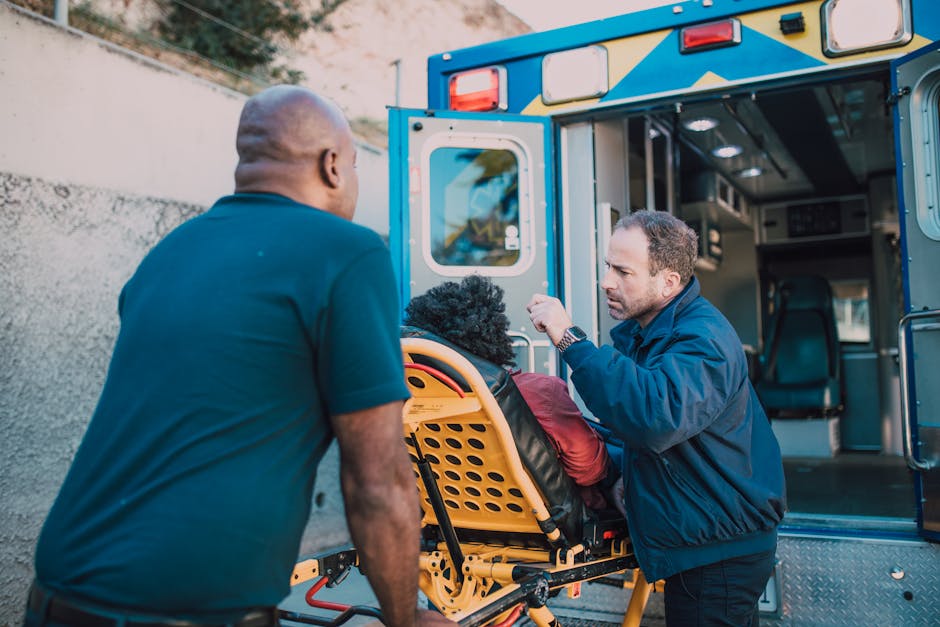
April 19, 1995. 9:02 a.m. A truck bomb detonated outside the Alfred P. Murrah Federal Building in Oklahoma City, killing 168 people and injuring more than 680 others. In the minutes that followed, first responders faced something most had never encountered at that scale: hundreds of victims scattered across blocks of rubble, many critically injured, with no single command structure in place and mutual aid units arriving from agencies that had never worked together. No amount of individual experience fully prepared them for what they were walking into.
What happened next became one of the defining case studies in modern emergency response. The chaos was real. So was the discipline that eventually brought order to it. Triage systems that had been developed and refined over the previous decade were tested under some of the most demanding conditions in domestic history. The lessons that emerged shaped how America trains first responders to this day.
At start-triage.com, we study how triage systems perform when real incidents demand them, not just when drills go smoothly. Oklahoma City isn’t just history for us. It’s a benchmark. If your team is building or updating a mass-casualty curriculum, the START training materials we provide are grounded in exactly these kinds of documented deployments and hard-won lessons.
What Was the Response to the OKC Bombing?
Within minutes of the explosion, Oklahoma City fire, EMS, and law enforcement units were on scene. The sheer number of injured overwhelmed initial responders immediately. Field triage began with responders directing anyone who could walk toward a safe perimeter, then working through non-ambulatory victims using color-coded tags to sort by severity. Mutual aid requests went out fast, drawing teams from across the region and eventually from all 50 states.
AP News reporting on the bombing’s anniversary documented more than 12,000 volunteers and rescue workers participating in the recovery effort, including urban search-and-rescue teams that arrived from jurisdictions with entirely different protocols and training backgrounds. Coordinating those teams, each running their own instincts about victim priority, created the kind of inconsistency that emergency management professionals had long warned about.
What Oklahoma City exposed was a critical operational gap: when responders from different agencies arrive simultaneously, they need a shared language and a shared process. Without it, two paramedics can assess the same patient and reach different priority decisions. That inconsistency costs lives in a mass-casualty incident. The case for a universal field triage standard had never been clearer.
What Is START Triage and Why Does It Matter Here?
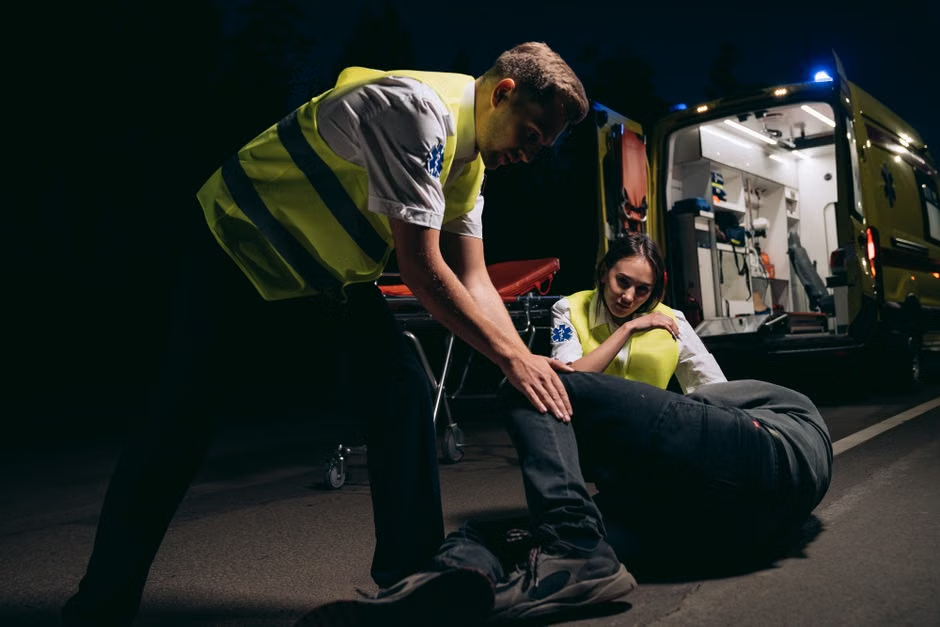
START stands for Simple Triage and Rapid Treatment. Developed in 1983 by Hoag Hospital and the Newport Beach Fire Department in California and updated in 1994, it was built to give field responders a fast, consistent method for sorting victims when clinical assessment of every patient isn’t possible. The core principle: evaluate each victim in 60 seconds or less, assign a color-coded tag, and move to the next person. Red means immediate intervention required. Yellow means delayed. Green means minor injury. Black means deceased or unsurvivable.
The assessment follows the RPM pneumonic: Respirations, Perfusion, and Mental status. Each check takes seconds. Each result maps directly to a tag color. The system is designed to be easy to learn, easy to remember, and easy to use, even when responders are operating under the kind of psychological and physical pressure that defines a real incident. After initial training, responders can triage each victim in 60 seconds or less, a performance threshold the system was built around from the start.
“Triage systems are essential for ensuring that limited medical resources are allocated efficiently during mass-casualty events, prioritizing care for those most likely to survive with immediate intervention.”
START had already been deployed in the Los Angeles riots in 1992 and refined through California fire department exercises when Oklahoma City happened. Responders already familiar with the system had a framework to fall back on. Those who weren’t often defaulted to individual instinct, which is slower and produces less consistent results across a large victim pool. That difference, measured in minutes per patient, mattered enormously at the scale of OKC.
Did Any of the Kids Survive the Oklahoma City Bombing?
Yes. The America’s Kids daycare center occupied the second floor of the Murrah Building and suffered devastating losses. Nineteen children died in the blast. But others were pulled from the rubble alive in the critical first hours, their survival directly tied to how quickly and accurately first responders could identify who needed immediate intervention and who could wait.
The pediatric dimension of Oklahoma City forced emergency medicine to confront a hard limitation in the original START algorithm: it was calibrated for adult physiology. Children breathe faster. Their baseline vital signs differ. A respiratory rate of 30 breaths per minute signals distress in an adult but is normal for a toddler. Applying adult thresholds to pediatric victims produces inaccurate triage tags, and inaccurate tags mean misallocated resources.
That recognition led directly to the development of JumpSTART, a pediatric-specific adaptation created by Dr. Lou Romig in 1995, the same year as Oklahoma City. JumpSTART adjusts the respiratory rate thresholds and assessment sequence specifically for children. If your team operates in environments where children may be present, including schools, daycare facilities, or large public events, JumpSTART training belongs in your curriculum alongside the adult algorithm. The START training DVD covers both systems and how to deploy them in mixed-victim scenarios.
What Lessons Were Learned from OKC?
After-action reviews from Oklahoma City produced a substantial list of operational improvements that influenced federal emergency doctrine for years afterward. The most actionable lessons for triage training purposes fell into clear categories:
- A shared triage protocol across all responding agencies eliminates conflicting priority decisions at the scene.
- Pediatric victims require age-specific assessment criteria, not adult defaults.
- Pre-incident training determines speed and accuracy under pressure. Experience alone doesn’t substitute for a practiced algorithm.
- Color-coded tagging allows arriving responders to read every victim’s status without re-assessing from scratch.
- An incident command structure must be established early. Field triage only works when someone is coordinating the flow of resources to tagged victims.
- Receiving hospital surge capacity is as critical as field triage. Hospitals near the Murrah Building were overwhelmed within the first two hours.
“The Oklahoma City bombing was the deadliest act of domestic terrorism in United States history and exposed serious gaps in the nation’s mass-casualty response infrastructure.”
The National Incident Management System, formalized after the 9/11 attacks, drew heavily on the failures OKC exposed. START’s deployment in Oklahoma City, alongside its earlier use at the 1993 World Trade Center bombing, established it as one of the most field-tested triage methods available to American first responders. Those two incidents are part of the system’s credibility, and they’re part of why California fire departments, endorsed through the California Fire Chief’s Association, adopted START at scale.
How Does the START Algorithm Run in Practice?
The START sequence is built for uniformity. Every responder follows the same decision tree, in the same order, on every victim. That uniformity is what makes the system scalable when victim counts run into the dozens or hundreds.
- Direct anyone who can walk to a designated safe area. These are your green patients. Injured, but not immediately life-threatening.
- For non-ambulatory victims, check respirations first. If absent, attempt to open the airway. If breathing resumes, tag red. If not, tag black.
- Check perfusion by assessing capillary refill or radial pulse. Absent or significantly delayed: tag red. Present: continue.
- Assess mental status with a simple command. Cannot follow commands: tag red. Can follow commands: tag yellow.
The sequence runs under 60 seconds per victim when practiced. Andres Price, who has studied START deployment across multiple real-world incidents, points to the system’s most underrated feature: it reduces decision fatigue. Responders don’t construct a new evaluation framework with each patient. They run the same algorithm, assign the tag, and move. That consistency protects both victims and responders in extended incidents. For teams that want to practice this before they need it, START training cards let you run full-scale drills with realistic scenarios so the algorithm becomes automatic under pressure.
When Is START the Right Tool, and When Should You Consider Alternatives?
START works best in incidents with five or more victims, where individual clinical assessment of every patient isn’t feasible. Fire-rescue teams, EMS units, industrial emergency response personnel, and school safety coordinators are its core audience. The system requires only basic first-aid knowledge to apply, so it doesn’t require clinical licensure. Any trained responder can run it.
There are contexts where START alone isn’t the right tool. In single-victim trauma calls, a full clinical assessment is both possible and appropriate. START trades depth for speed by design. In hospital emergency departments, systems like SALT triage or hospital-specific protocols are often better suited because clinicians have access to far more diagnostic information than field responders do. In pediatric-heavy incidents, JumpSTART should replace or supplement the adult algorithm.
Some jurisdictions, particularly those working within European-influenced systems, use MASS triage or other alternatives. The core principle across all of them is the same: sort quickly, allocate to who needs it most, and move. START’s advantage is the depth of field history behind it and the training infrastructure that’s been built around it over four decades.
Applying OKC Lessons to Your Training Program Today
The after-action insights from Oklahoma City belong in your next drill planning session. A few specific ways to apply them:
- Run multi-agency exercises where responders from different organizations coordinate triage under a shared system. Interoperability failures were a documented OKC problem.
- Include pediatric victim scenarios in every mass-casualty drill, not just events where children are the likely population.
- Measure triage speed during exercises. If your team averages 90 seconds per victim instead of 60, that gap multiplies across a large incident.
- Assign a dedicated triage officer role in every drill. Someone has to coordinate the flow from field assessment to treatment area to transport.
- Debrief every exercise the way OKC responders were eventually debriefed: what decisions were made, what drove them, and what would change next time.
Training resources designed for exactly this kind of scenario-based approach, including instructor manuals, drill plans, and quality assurance tools, are available through the full START training materials catalog for agencies running regular exercises.
Oklahoma City changed how America thinks about domestic mass-casualty response. The responders who worked that scene did it with imperfect tools and incomplete protocols. What they learned under pressure, at enormous cost, became the foundation of better systems. START’s broader adoption, its deployment on 9/11, its refinement through JumpSTART, all of it traces back in part to what went wrong and what went right in Oklahoma City. The best time to learn the algorithm is long before you need it. Train until the decisions feel automatic. When every second counts and several patients require help at once, that preparation is the difference between organized response and improvised chaos.

Recent Comments